Showing posts with label HOME. Show all posts

Is a Wet Cat Nose Normal — Or a Cause for Concern?

Cute little cat noses - who doesn't love them? Nothing could be sweeter than a kitten rubbing against you, nose first. As with humans, certain body functions of cats can vary from one individual to another. This is the case of the nose of felines. Some people think that an excessively dry or wet cat's nose indicates disease - but that's a myth.

You see, some cats have naturally drier noses than others, and the temperature and humidity levels of most cats' noses vary throughout the day. Therefore, one of the best ways for us humans to decide whether or not to worry is to know what is the normal "state of the nose" for our kittens.
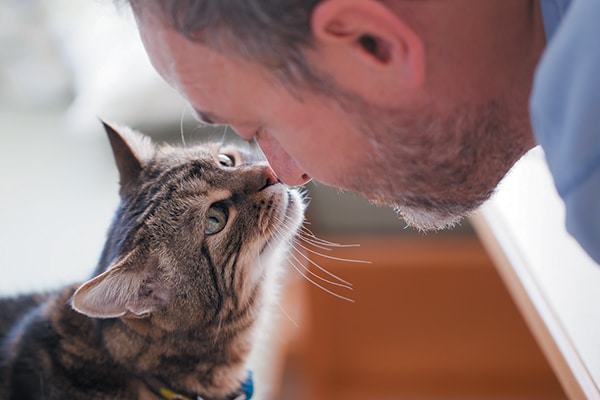
Adopting an older cat may be your purrfect fit. Photography ©1001slide | Getty Images.

Why do cats have wet noses?

The skin around the nostrils is called the rhinarium, and the sweat glands in the rhinarium create moisture. The inner tear duct also creates drainage which contributes to a wet nose. Humans sweat to regulate their body temperature and a cat can use the moisture from its nose - by evaporation - to achieve the same result.

Cats are meticulous groomers and, by licking themselves, they automatically add a layer of moisture to the nose. Saliva can dry out quickly, but this is one of the reasons why a cat's nose is wet.

A wet cat's nose can also be due to something else simple: the bowl of water. A bowl of clean, clear water can make it difficult for some cats to determine the depth of the liquid. When going to drink, the kitten may inadvertently dip its nose into the bowl, leaving it with a revealing wet nose.
A wet cat's nose versus a dry cat's nose

A dry cat's nose is just as common as a wet cat's nose, and is generally not a cause for alarm. If a cat spends a large part of its time in full sun, it may have a dry nose. It also happens to us humans when we expose ourselves to the sun! A dry cat nose can also appear if a cat spends a lot of time near a non-solar heat source such as a chimney or heating duct.

What other factors can affect a wet cat's nose compared to a dry cat's nose?

The humidity level of a nose is also influenced by the humidity level of the air. This is especially true during the winter months in many places.

The main reason a cat's nose skin is too dry or cracked is dehydration, which is caused by a decrease in water intake or an increase in fluid loss. Consult your veterinarian if you think your cat is dehydrated. Other signs of dehydration in cats include the following:

Sunken eyes
Lethargy
Loss of appetite
Dry mouth
Depression
High heart rate
Panting
The elasticity of the skin

When is a wet cat's nose a cause for concern, and how to treat it?

Ingrid King, a cat expert and certified veterinary journalist, says, "Although people seem to think that a wet nose is a sign of health [and] a dry, warm nose is a sign of illness, that's not true. Cats' body temperature is naturally higher than that of humans, so most of the time a cat will feel warm to the touch".

"A cat's nose can go back and forth between being wet and dry several times a day, depending on the cat's activity", Ingrid continues, "Did your cat just eat or wash? His nose will be wet. Has he been lying in the sun or is the air in your home extremely dry? His nose will be dry. Your cat's nose will only be an indicator of his health if you notice something abnormal, such as peeling skin, bumps or a runny nose".
Is it a wet nose or a runny nose?

A runny nose, unlike a wet cat's nose, can be a concern and should be examined by a veterinarian to rule out diseases such as upper respiratory tract infections (URIs). Various bacterial and viral infections can cause upper respiratory tract infections, including feline herpesvirus and feline chlamydia.

The most common symptoms of upper respiratory infections are as follows:

Excessive nasal discharge
Sniffing and sneezing
Red and watery eyes
Colored and bubbly nasal discharge

A runny nose can also signal an allergy and, after a thorough discussion of the symptoms and daily environment with a veterinarian, can result from simple changes in food, bedding or other environmental factors.

The last word on a cat's wet nose

Here again, a healthy cat's nose generally goes from wet to dry throughout the day. It is important to know your cat's "normals" to be aware of any deviation, whether it is a wet cat's nose or anything else. A sudden change in humidity levels, accompanied by symptoms, can indicate illness, and a veterinarian should examine it.

Is Vegan Cat Food Okay?

Given the fact that cats are obligate carnivores, creatures that feed primarily or exclusively on animal matter for their health and well-being, is becoming a vegetarian a good idea? Is vegan cat food okay?
Is vegan cat food okay? A vet weighs iAs cats are obligate carnivores, creatures that feed primarily or exclusively on animal matter for their health and well-being, is becoming a vegetarian a good idea? Are vegan cat foods acceptable?
Is vegan cat food acceptable? A veterinarian weighs the pros and cons.

A cat vegetable sandwich.

The risks of vegan cat food

The risks of a vegetarian or vegan diet for cats include insufficient total protein intake, an imbalance of amino acids such as taurine or essential fatty acids such as arachidonic acid, and a deficiency of vitamins and minerals that are obtained ideally, or solely, from meat or other animal products.
Health Risks of Vegan and Vegetarian Cat Foods

These dietary problems can lead to serious and sometimes irreversible pathologies, according to Jennifer Larsen, DVM, M.D., M.D., a certified veterinary nutritionist and professor of clinical nutrition at the University of California at Davis Veterinary School. The problem most often mentioned by veterinarians is taurine related dilated cardiomyopathy (an enlarged heart with weak contractions and low pumping capacity), but low taurine levels can also lead to reproductive failure, growth retardation and eye problems, she adds.

"We saw a case of a cat that almost died from taurine deficiency," says Dr. Larsen. "The owners were feeding their cat vegan kibble, a commercially available vegan diet, and they were mixing it with cooked chicken breast for some reason, but there wasn't enough taurine for the cat, obviously, and that resulted in a near-death experience for the animal.

Vignette: Photograph ©Gabriele Grassl | Getty Images.

Cats Are Obligate Carnivores — What That Means & Why It Matters

Next time you catch your cat napping in the afternoon sun, think of the tiger. Think lion. You wouldn't think a lion or tiger would eat a plant-based diet, would you? Of course you wouldn't! Big cats are obligate carnivores, which means that eating meat is absolutely essential to their biological survival.

Your little tiger is not much different. Domestic cats are true obligate carnivores who must eat meat in order for their bodies to receive certain compounds that are vital to their long-term health and well-being.

Cats need more protein than either humans or dogs, according to Deborah E. Linder, DVM, MS, Certified Veterinary Nutritionist, Director of the Animal Obesity Clinic at the Cummings School of Veterinary Medicine at Tufts University. Kittens need more protein than most other animals, and adult cats need two to three times more protein than dogs, she adds.

Vegetarian or vegan diets don't provide the amino acids needed for good feline health and are too rich in carbohydrates that cats can't assimilate, according to Marla McGeorge, JD, DVM, a feline consultant in Portland, Oregon.

(Is being vegan healthy for YOU? Come find out >>)

Obligate carnivores — what exactly does that mean?


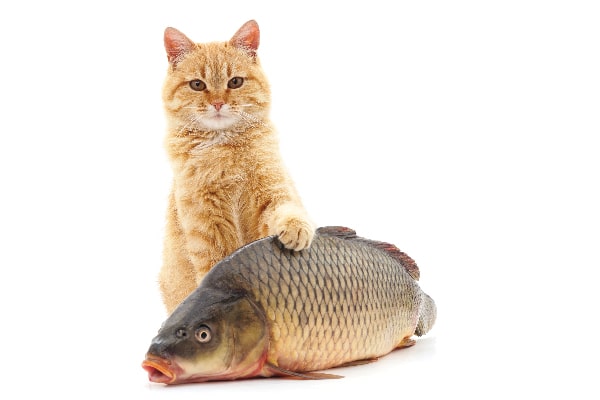
A ginger tabby cat with a fish.

Before going any further, let's clarify what exactly are the obligatory carnivores :

Compulsory (adjective): ob-li-gate - biologically essential for survival - limited to a particularly characteristic way of life
Carnivore (noun): car-ni-vore - an animal that feeds primarily or exclusively on animal matter.

Essential nutrients for cats

Taurine is a vital amino acid that cats cannot obtain from any other source than animal protein. Cats cannot make taurine from other amino acids like most mammals can," said Joe Bartges, DVM, PhD, DACVIM, DACVN, professor of internal medicine and nutrition at the University of Georgia College of Veterinary Medicine.

According to Dr. Linder, when cats are fed a diet too low in taurine, they can suffer from retinal degeneration, dilated cardiomyopathy and reproductive problems. While all cat foods should contain taurine, she says, the total amount in the diet is not the only important factor. Other ingredients in the diet can affect how taurine is broken down in the gut and its bioavailability to the cat, so it's important to feed a diet that has been carefully formulated and tested, she adds.

Cats also lack the enzyme needed to make their own arginine, another amino acid found in animal proteins, so more of it must be provided in their diet, according to Dr. Linder. Arginine is involved in the removal of ammonia from the body; if this function is impaired, cats can lose weight, vomit, suffer neurological problems and even die.

A diet rich in meat also provides vitamin A, a nutrient that cats are unable to convert from beta-carotene, as well as other key nutrients, including arachidonic acid and vitamin B12, which cannot be obtained in sufficient quantities from plant foods, according to Dr. Bartges. Without a regular supply of these nutrients, cats can suffer from liver and heart problems, not to mention skin irritation and hearing loss, he says.
Feline diets also require niacin and vitamin D3, according to Dr. Linder.

What protein is best for cats?


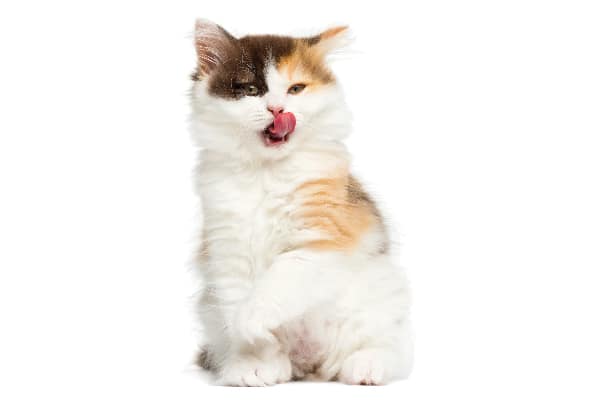
A calico cat licking her lips.

As for which animal protein is best for these obligate carnivores - beef, chicken or fish - there is no better type, according to Tony Buffington, DVM, PhD, DACVN, professor emeritus of veterinary clinical sciences at the Ohio State University College of Veterinary Medicine.

In fact, it doesn't matter whether a cat gets its protein from a dry or wet food, as long as it eats that food and meets its nutritional requirements," says Dr. Buffington. The key is to review the label. Labels on commercial cat foods must indicate that the product is formulated to meet the nutritional profiles of the Association of American Feed Control Officials and that it meets their guidelines for nutritionally complete, balanced and age-appropriate nutrition for your cat. Of course, if your cat has specific nutritional needs, always follow your veterinarian's recommendations," he adds.


Can Cats Eat Bread?

I never thought I'd find myself Googling "Can cats eat bread?", but I did it recently while shouting "Don't eat that!" to my sneaky kitten. During a recent series of product tests in my test kitchen, I discovered that my cat was trying to steal a slice of gluten-free bread. He jumped on the counter and started licking each slice of bread, carefully arranged for human consumption (well, at least it was intended for human consumption).

At first I thought it was the butter spread on the bread, but he was stealing slices of ordinary bread. He was trying to pick up a piece of bread by the crust and bring it back to the ground. I was shocked by this behavior because he had only managed to steal chicken nuggets from the counter before. So, do cats like bread? Is it a secret that they hide from us? Can cats even eat bread?

Can Cats Eat Bread and Other Breaded Products?


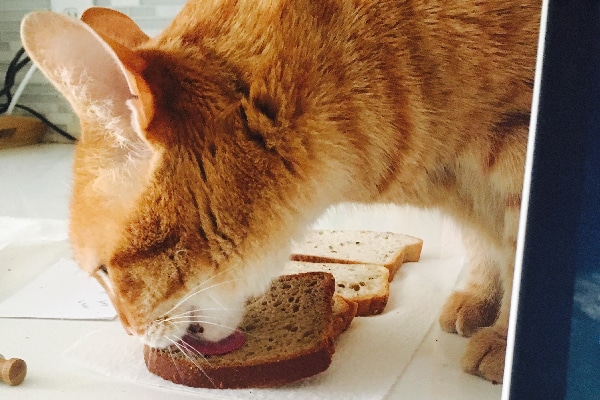
A cat licking bread.

When it comes to the question "Can cats eat bread? I'm not alone. My friends have told me about their carbohydrate loving cats. One of them told me about his cat who loved to steal the crust off pizzas to get to the inside of the dough. Another was in love with a particular brand of pancake mix - cooked dough and raw dough. My friends couldn't figure out if it was the filling on the bread (like butter, cheese or pepperoni) or the bread itself. They too wondered if cats could eat bread and if the bread was safe for them.
Can cats eat bread? Is it dangerous for cats?

Is bread safe for cats? Fortunately, bread is not so dangerous for cats. So, the answer to the question "Can cats eat bread?" is technically "yes" - but it's not really recommended. Cats don't need bread in their diet.

But can cats eat bread that is not baked?

Dr. Heather Loenser, senior veterinarian at the American Animal Hospital Association, warns about the dangers of eating raw or leavened bread dough. "The biggest danger for cats would be eating raw dough because the fermentation of yeast in the dough can cause the dough to expand in the cat's stomach," she warns. "This can cause severe abdominal pain and, theoretically, cause a perforation of the stomach."

Dr Loenser adds: "Because alcohol is a by-product of fermentation, alcohol poisoning is possible. The signs would be vomiting, diarrhoea, lethargy, difficulty walking or the impression of being drunk. Fortunately, few cats seem to be attracted to eating raw bread dough - it is much more of a problem with dogs".

Can cats eat bread with certain fillings or supplements?

When we ask ourselves "Can cats eat bread?", we also run into problems because of what is on or in the bread. We have already asked if cats can eat cheese, a common filling on bread. Can cats eat cheese? Yes, but only in moderation, because cats are lactose intolerant after the birth of their kittens.

But can cats eat bread with non-dairy fillings? "Other potential ingredients in bread that could be a problem are garlic and onions, which can cause damage to red blood cells and anemia," says Dr. Loenser. Even in small amounts, garlic can cause stomach upset, vomiting and diarrhea in cats. Consult a veterinarian if you think your cat has consumed garlic.

How to Keep Your Cat Active and Cool During the Summer

Summer is the time to relax and slow down, a time to seek relief from searing temperatures. Cats are geniuses for finding the coolest spots in their homes. Sometimes they stretch out on cold bathroom tiles or in places where there are refreshing cross breezes. Although kitties are not as active in hot weather as they are when it's cooler, they still need to do more than nap. Encourage your cats to try these six cool activities that stimulate while encompassing their natural behaviors.summer is a time to relax and slow down, a time to seek relief from hot weather. Cats are geniuses at finding the coolest places in their homes. Sometimes they lie on cold bathroom tiles or in places where there are refreshing cross breezes. Although kittens are not as active in hot weather as they are in cooler weather, they still need more than a nap. Encourage your cats to try these six cool activities that stimulate them while embracing their natural behaviors.

cat-summer-cool-cubes-160323449

1. Ice cubes in meat broth

Help keep your cat cool and entertained with these easy-to-prepare meat broth ice cubes. Start from scratch and cook your own broth, as commercial broths are flavoured with sodium, garlic, spices and other ingredients that are toxic to cats. You only need two ingredients: raw meat and fresh water. Place your cat's favourite meat, along with the bones, in a large saucepan, cover with water and bring to a boil. Cooking time will vary depending on the meat and the amount of water. Do not add anything to the mixture, just meat and water.

After preparing the broth, remove the fat and pour the broth into ice cube trays. Broth cubes are most appetizing when a piece of meat is added to each cube before being placed in the freezer. Once they are frozen, put a few cubes in a large shallow bowl for your cat. Every kitten in the house deserves its own bowl with two frozen meat cubes. Cats enjoy tasting the melting broth while getting the "prize" of the meat.

cat-summer-cool-duck-50305846

2. Water toys

Water can be made more attractive with toys. Float hollow plastic balls and other waterproof toys in bowls, fountains and sinks. Your cat will love to play with bats and try to catch elusive objects. Make sure the toys are safe, cannot be swallowed or have parts that can be bitten.

cat-summer-cool-faucet-258874256

3. Water games

Many cats like to drink and tap water. Give you and your feline companions motion-sensitive water faucets that easily attach to kitchen and bathroom faucets. Although designed for humans, most cats quickly understand how to activate them by head movements and paw strokes.

Pet water fountains are also popular with most kittens. You can choose from a variety of commercial models, including decorative and expensive ceramic models, as well as inexpensive plastic models. All pet water fountains should be cleaned at least once a week.

cat-summer-cool-ball-toy-297170282

4. Floor toys

Cats are individuals - everyone has their own preferences when it comes to toys. Many like ball toys, while others like to spend time fishing for toys and treats from puzzle boxes, feeders and toys. Some choose to put their favourite toys in their mouths or chase them across the floor, while others prefer to stalk, pounce and catch toys dragged by their peers.

cat-summer-cool-tower-tree-157621712

5. Vertical territory

If cats could write, they would put large cat trees and apartments at the top of their list of must-haves. They would also ask you to place them near screened windows. These are perfect places to observe what's going on in the neighborhood while enjoying a cross breeze and taking a nap after a play session. Also incorporate vertical territory into your cat's play sessions by dragging over posts, feathers and ribbons for your kitten to chase.

cat-summer-cool-paper-bag-135316091

6. Hiding places

Most kittens like to nap, play and hide under furniture and in bags, boxes and tunnels. Bags must be safe - use only paper bags without handles. Make these places more enjoyable by angling them to catch a crosswind. Encourage your cat to use them for something other than hiding and napping by throwing her favourite toys and rolling treats in them.
Know when it's time to play

Choose the right times to play. Avoid vigorous gambling in hot weather - heat can cause serious health problems. Instead, encourage gambling in the mornings and evenings when it's cooler. You may be able to attract your cat by rubbing her favourite toys with treats and catnip. Also incorporate play into meals by putting food and treats in puzzle boxes and toys.

Thomas-I-Love-You-Perch.jpg

In addition to the dangers of overheating, know your cat's limits when playing with him. Older cats and cats with disabilities do not play as intensely or as long as young adults and kittens. Even kittens that like to play intensely should not be pushed to the point of panting and breathing heavily. Tailor play sessions to the individual: they can be as simple as hitting sticks and ice cubes with broth, or as chase games.

Scruffing a Cat — Why You Shouldn’t Do It and How to Restrain a Cat the Right Way

You've probably heard the saying, "Catch them by the skin of their neck!" Although it's an old saying, there are still some people who believe that rubbing a cat is an appropriate skill for handling felines. Why this myth is still believed to be true is puzzling: there are far more effective and humane ways to handle your cat. Experts agree that butchering a cat is a terrible practice that should not be the most effective method to immobilize a feline.

A mother cat scruffing a kitten.

What is a guard cat?

It is said that a cat rubs itself when you take the skin of its neck (called cat skin) in its hand and hold it. The skin is looser in this area, and some people mistakenly use the skin as a handle. Dr. Kelly C. Ballantyne, Clinical Assistant Professor at the University of Illinois School of Veterinary Medicine, explains why your cat's skin is still being used: "Brushing can make some cats immobile, which can allow veterinarians (and owners) to do things without fighting with the cat, such as cutting nails or administering medication".

Another reason why people continue to perpetuate this wrong way of interacting with cats is that they think they are imitating what a mother cat does. "Cat owners may also feel that rubbing is a natural way for cats to reprimand each other, but this is not true," says Dr. Ballantyne. "While mother cats carry their kittens through the scrubland, this is to move them from one place to another when they are very young and is not a form of discipline".

"The garrigue can be uncomfortable and scary," says Dr. Ballantyne. "And while rubbing may temporarily immobilize some cats, it's not effective for all cats. If the cat is frightened during the experiment, it may change its strategy to get out of the situation, for example by hitting, scratching or biting".

How to hold a cat without rubbing it

There are many ways to safely restrain a cat without the need for rubbing. Duke University's Dr. Margaret Gruen says, "Much work has been done on how to handle cats without stress and fear. Allowing them to use at least one limb and providing them with distractions (such as tasty food) can be helpful when it comes to restraining cats. Most cats do well with a "less more" type of handling. Rubbing and stretching a cat will only cause it to have negative associations with the experience and gradually get worse. Brushing is often done as a shortcut, but in the long run, it has a cost for the cat's well-being and for the owner's willingness to take his cat to the vet".

Dr. Ballantyne recommends using a practical, everyday tool, such as a towel. "Some of the most common options are to allow the cat to hide its head under a towel or blanket or to gently wrap the cat's body in a towel. It is important that the towel provides even and uniform pressure, but not so tight that it interferes with the cat's breathing".

While Dr. Ballantyne's advice may sound technical, you've probably seen this technique in action before. The social media meme of a "burrito cat" is actually a cat that is restrained and obviously satisfied with the process. Dr. Katherine Houpt, VMD, PhD, Diplomate - American College of Veterinary Behaviorists James Law Professor of Behavior Medicine, emeritus, tells us that he feels safe at the Temple Grandin. Grandin observed that animals that were gently restrained on all sides were comforted by this feeling. It's like swaddling a baby, and there are products on the market today that do exactly that, like Thundershirts.
If you have to hold your cat - it's easy

Forcing a cat to do something he doesn't want to do will probably not end well. If you have to restrain your cat, and you are using the burrito method, stop doing it if his resistance intensifies. Let him calm down and try again once he is comfortable. For routine procedures such as medication or nail trimming, waiting an hour or so can make the process easier. No matter what you do, rubbing a cat will only make things worse!

Tell us about it: How can you control your cat gently and safely?


When Do Kittens’ Eyes Change Color?

Look into your cat's eyes. What color are they? The vast majority of adult cats' eye colors exist in a spectrum ranging from green, gold and yellow on one side to orange, copper and brown on the other, with a host of variations and shades in between. But what about blue-eyed cats? All kittens are born with nominally blue eyes, and some cats retain this apparent hue throughout their lives. Why qualify a color with words like "nominally" and "apparent"? And when do kittens' eyes change color and why?

The range of blues we see in cats' eyes is the result of refracted light, rather than a function of pigmentation. Although we perceive this color in a cat's eye as blue, it is not a color in itself, but a lack of color combined with refraction of light. What produces other eye colors in cats is the degree of transparency of the outer eye as well as the pigment available in the cat's iris. Let's answer the question "When do kittens' eyes change color" and give an overview of how and why kittens' eyes change color.

A pile of newborn tabby kittens.

Kitten Eyes: What you need to know about the first month

The first step to answer the question "When do kittens' eyes change color" is to know that their eyes are not even open at birth. When leaving the uterus and entering the birthing box, the eyes of a newborn kitten are closed tightly and are of no use anymore. Just like their hairless body and closed ears, a kitten's eyes are not fully developed at birth. The only senses that function from birth are those of touch and smell. With the help and protection of its mother, a kitten is able to eat and sleep. These activities provide the fuel and raw materials necessary for general growth, including preparing the eyes for vision.

Each kitten develops at a different rate, but in general, a kitten's eyes are mature enough to open during the second week of life, between 7 and 14 days after birth. Once the eyelids begin to separate, it may take two or three days for them to open completely. Even then, open does not mean functional. Part of kittens' eye maturation is developing the ability to process light and interpret sensory data.

During the first month to five weeks, a kitten can see about as well as Han Solo just out of his carbonite prison in the Return of the Jedi, when everything appeared as a "blur of light". Just like Han Solo, who stumbled a bit at first, eye-hand - or eye-pattern coordination is most likely still a work in progress for a kitten. Most kittens will reach full eye and visual function at some point between weeks 5 and 7.

Five kittens being held in a person's arms.

So, when do the kittens' eyes change color?

During this developmental period, a baby kitten learns to see, but her eyes will not be fully mature - including their adult coloring - until 3 to 6 months of age. For kittens, it's vision first, color second. During the first few weeks after a kitten's eyes are opened, they will appear blue. This hue is the effect of light refracted by the cornea, the transparent outer cover of the eyeball and the relative thickness of its four layers. As the color of a cat's eye matures, our perception of it continues to be affected and influenced by this blue or blue-green refracted outer covering.

So when do kittens' eyes change color? At the 6th or 7th week of age, a kitten's eye color begins to change. The iris, the colored part of the eye, contains melanocytes. Once the eye is mature enough, these melanocytes begin to produce melanin, the pigment that gives the eye its mature adult color. The number of melanocytes and the amount of melanin they produce determine the final color and its depth or intensity. On the spectrum we mentioned above - green at one end and brown at the other - light green means that a cat's iris has produced the smallest amount of melanin, and brown the largest.
Exceptions: blue-eyed and odd-eyed cats

There are exceptions to the question "When do kittens' eyes change color?". - including adult cats with blue eyes and cats with iridum heterochromia, or two eyes of different colors. Cats that retain blue eyes in adulthood do so because of low or no melanin production. Examples include colorpoint cats, such as Siamese, and breeds that have developed with Siamese as the main genetic contributor. Among these are :

  1. Balinese

  2. Birman

  3. Himalayan

  4. Javanese

  5. Ragdoll

  6. Snowshoe

  7. Tonkinese


Like their fascinating distribution of fur colors, the blue eyes of colorpoint cats are the result of a form of partial albinism. In these cats, the blue eyes, just like the limited coat color, are due to a limited melanin content. Adult blue-eyed cats are also typical of Ojos Azules, and in much deeper and darker shades than those usually seen in melanin-deficient colorpoint breeds.

For white-haired cats and some bicolor cats, blue eyes in adulthood may be the result of genes that suppress or mask other pigments, rather than a simple absence of them. While the blue eyes of colorpoint cats are the result of a partial albino inheritance - the Siamese and its cousins have a white coat before their colored spots develop - an all-white cat is not necessarily an albino itself. A white cat can be distinguished from a true albino by its eyes, which range from pale blue to pink. Like blue, pink is not an inherent color of the eye, but a reflection of the blood vessels at the back of the eye.
Can a cat's eyes change color with age?

Cat eyes are as mysterious and impenetrable to us as the creatures themselves. Ideally built to be used by nocturnal predators, they are extraordinary organs. They can detect the slightest movement in situations where there is virtually no light available. What is truly remarkable is that when a kitten is born, it is functionally blind, and its eyes grow and develop along with the rest of the body.

Between the time a kitten is born and the time it can be safely spayed or neutered, a number of changes occur in its development. Since many of us only adopt cats after weaning, we completely miss this period of rapid maturation. The change in eye color is one of the last processes that we can really observe if the timing is right and if the kitten's rate of development is slow enough.

Once a cat is physically mature, its eyes must maintain a constant color throughout its life. If you notice a dramatic change in eye color in an adult cat, it could signal a number of health problems, ranging from eye infections and uveitis to leukemia and feline immunodeficiency virus. As with any sudden external change, the best thing to do if you notice such a change is to consult a veterinarian.


What Is Fading Kitten Syndrome and Why Do So Many Foster Kittens Die From It?

Every spring, Mother Nature reveals her regenerative power - and the remarkable fertility of cats, in the form of millions of newborn kittens. Wild cats are the main source of this abundance. Most kittens born to feral mothers will make wonderful pets if they are properly socialized from an early age. Many of these kittens end up in the care of kind-hearted people who take them in after they are orphaned or abandoned. Unfortunately, when spring turns into summer, Mother Nature reveals her dark side and often breaks the hearts of the foster parents who have worked hard to raise the young kittens. A staggering proportion of kittens succumb to Faded Kitten Syndrome before reaching the age of nine weeks.

What are the stats?


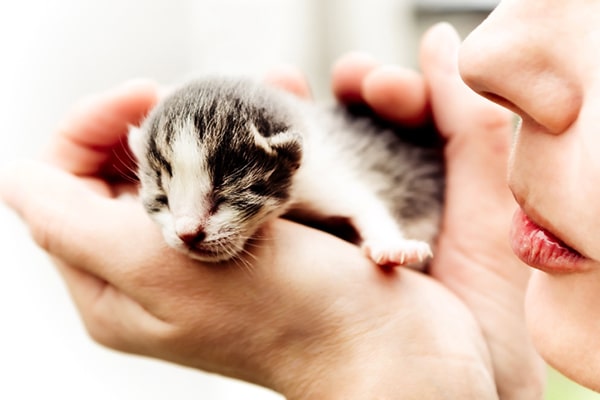
A newborn kitten in the palm of a human hand.

The most recent sources I've consulted estimate that even under the best circumstances - in well-managed catteries - 15-27% of kittens die before the age of nine weeks.

Not surprisingly, therefore, foster kittens are not the best placed in the statistics. Being orphaned or abandoned at an early age, with no prospect of a father in the picture, does not give an individual much of a head start in life. Mortality among litters of kittens in foster care can be extremely high. It is not uncommon for the mortality rate to reach 100%.
Why does the kitten in decline syndrome occur?

And, more importantly, what can you do to prevent kitten declining syndrome?

The word "syndrome" should be a clue. Kitten syndrome is not a single entity, but rather describes a large number of problems and conditions that can cause the death of young kittens.

Related: 7 things to do if you find an orphaned kitten

Most kittens that die of the discolored kitten syndrome seem to get sick and die suddenly. However, with a few exceptions (such as hypothermia and trauma), the problem usually develops gradually but is very difficult to detect until an attack develops. I'm sorry to say that the prognosis for kittens in crisis is bad. Therefore, the key to reducing the number of deaths due to kitten extinction syndrome is the early detection of subtle problems before a seizure occurs.

Causes of fading kitten syndrome


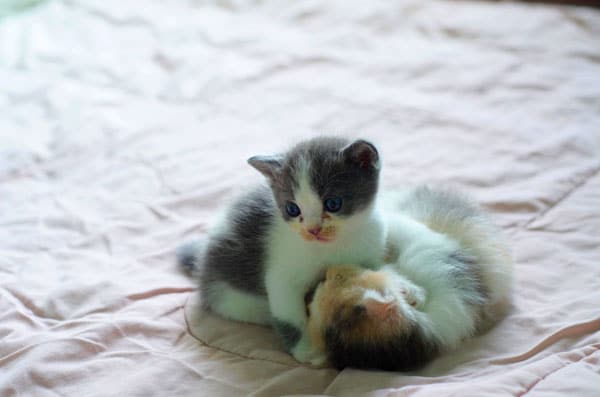
Kittens playing with each other (social play)

In the event of an attack, almost all kittens that fade show similar symptoms. Profound lethargy, low body temperature, pale gums, low respiratory rate and the inability to root, nurse or eat are almost universal signs of the syndrome. However, these signs can be caused by a wide range of problems.

Inadequate mothering - by the feline mother - is a major risk factor for the declining kitten syndrome. Most foster kittens are subject to this risk factor in the extreme, as they have been orphaned or abandoned by their mother. Even kittens whose mother is in the picture may be at risk if her mother is inexperienced, unable to produce enough milk, unwilling to let the kittens suckle, stressed, malnourished or, paradoxically, obese.

Traumatism and hypothermia are two causes of the kitten syndrome that fades away and occurs really suddenly. Trauma most often occurs when a kitten falls from a height or is crushed. Hypothermia occurs when kittens are separated from each other and from their mother in a cold environment. Note that hypothermia is either a cause or a result of the kitten passing out. Almost all kittens in crisis that fade are hypothermic.

Infectious organisms are often responsible for the kitten fading syndrome. Kittens are at risk of septicemia due to bacterial infections. Viral infections by organisms such as feline herpesvirus, calicivirus, panleukopenia, feline FIV/AIDS and feline leukemia virus can trigger the syndrome. Parasitic infestations by roundworms, coccidia or other organisms can trigger attacks. Many of these infections are related to a breakdown of the immune system, which is usually associated with a condition called thymus atrophy.

Hereditary defects ranging from heart irregularities to a poorly developed immune system can cause the discolored kitten syndrome.

Hemolytic anemia is another possible cause of this syndrome. This condition can occur when a kitten has a different blood type than its mother. When the kitten nurses during the first days of its life, it ingests antibodies that attack its blood cells.

Treat kittens that fade and prevent seizures

Kittens in crisis must generally be treated by veterinarians. The main elements of treatment are thermal support, fluids, dextrose (sugar) and often antibiotics. If the affected kitten begins to warm up and recover, nutritional support and deworming medication can be added. Unfortunately, the prognosis for kittens in crisis is poor, and many do not survive even with treatment.

What are the signs of kitten syndrome in decline?

Seizure prevention is essential to reduce the number of deaths due to fading kitten syndrome. The first signs of the disease are subtle but often detectable. Sick kittens may not stand upright when turned on their back. They may not take root and suck normally. Their eyes may not open at the usual age of 5 to 14 days. They are often smaller than their littermates.

Most importantly, they may not gain weight normally. Healthy kittens should gain 7 to 10 grams per day. Experts recommend weighing kittens on a gram scale at least once a day (and many experts recommend weighing them twice a day). High quality gram scales can be purchased at kitchen supply stores, smoking rooms (you can guess what the scales are for some people) and online.

Kittens that don't gain weight at an appropriate rate need special attention, especially with regard to feeding. Newborn kittens should be fed formula or milk every two hours. Porridge weaning can begin at about four weeks of age.

A kitten lost to kitten extinction syndrome can sometimes be a warning sign of problems for other kittens in the litter. A veterinarian should evaluate the mother and any kittens remaining after such an incident.

A last word on the endangered kitten syndrome

Although this article is intended for foster parents, I will add a few tips for breeders. Both sire and dam should have a blood test before breeding, and this information should be used to prevent hemolytic anemia. Both should be tested for feline leukemia and FIV. The dam should be fully vaccinated and dewormed prior to breeding. And don't forget that the milk consumed on the first day or so, called colostrum, is the most important milk that kittens will consume because it contains antibodies that protect kittens from disease.

With diligence and early detection, some cases of declining kitten syndrome can be reversed before a crisis develops. However, I am sorry to say that many other cases will not respond to the efforts of even the most involved foster parent. Foster parents, be aware that even though the loss of a kitten - or even an entire litter of kittens - is heartbreaking, it doesn't necessarily mean you did something wrong. Please keep up the good work.


There’s Now a Dating App for Cat Lovers

Has your love life been a disaster? Well, there's an app for that! Tabby - The Cat Person's Dating App is an offshoot of Dig - The Dog Person's Dating app, launched in 2018 by sisters Leigh and Casey Isaacson. Tabby is a great way for cat lovers to meet each other. The app has partnered with two influential social media cat fathers, Nathan "The Cat Lady" Kehn and Sterling "TrapKing" Davis, to get the message out.

Cat fathers in particular love this idea. Recent studies have shown that men get fewer hits on general dating applications if there are cats in their dating profile photos.

"Cats are a way of life," says Nathan, who is a father of four cats. "People who love cats are just as unique as the cats they love, but we understand each other. Finding someone who loves cats the way you do is vital.

Cat lovers and cat owners will be able to meet each other, plan cat-friendly appointments, share videos, photos and stories, and get contracts from pet companies.

"I want people to know that being compassionate and saving cats is a great thing," said Sterling Davis, who runs a non-profit cat spaying and neutering association in Atlanta. "If I can show other men that there are people out there who really appreciate what they are doing, maybe we can help them find love AND find other homes for cats at the same time".

How to Find the Perfect Cat for Your Family

A kitten or two, an adult or a senior? While it is tempting to choose the cutest, appearance should not be the only factor. A cat's behaviour should match your family's lifestyle.

What is the age of the ideal cat for your family?

Kittens quickly find a home through shelters, rescues and breeders. But are you ready for a kitten? You must first test your home for kittens. Anything that hangs is a toy for kittens, including wires, strings or ropes; valuables may be broken; toilet seats must be lowered; and poisonous plants must be removed. But will the need to protect kittens ever cease?

"It is difficult to determine what a kitten will look like as an adult," says Dr. Terri Derr of Veterinary Behavior Options in Minnetonka, Minnesota. "You simply can't detect an adult personality in a kitten like you can in a puppy."

What about an adult feline? Dr. Derr says that an older cat will be more predictable than a kitten. Their personality is well developed, and their size and appearance is fixed. Adult cats also have the ability to "take better care of small children, because they know how to run away when they are punched. An adult cat also has other advantages, such as veterinary fees.

Many of these animals are often already spayed or neutered and have their shots.

Looking for more predictability? Try an older person! According to Dr. Leanne Lilly, a veterinary behaviorist and assistant professor at Ohio State University School of Veterinary Medicine, cats are seniors at the age of 8: "Owners have a good idea of what these cats look like, but you have to consider that they may have more medical than behavioral problems. However, these animals are generally easy to care for and "since cats can live into their teens and twenties, adopting an older cat can mean many wonderful years to come".

find the perfect cat for your family

Photo: CasarsaGuru | Getty Images


Special needs pets are the ideal cat for your family.

Cats with special needs also want a home. According to Dr. Lilly, three-legged or blind felines can live long and thrive just like their healthy counterparts. Adult cats carrying viruses such as feline leukemia and FIV will likely have a shorter lifespan, but will still make excellent pets. Sometimes what makes an animal different is exactly what makes it so endearing.

When Brad Madson of Edina, Minnesota, took early retirement, he decided he wanted a cat. A friend told him about a kitten with feline leukemia, Minnie Mae, at a local shelter. The cat had been scared of the shelter staff, but when Brad came to see her, she came out and head-butted him. "I knew she was destined to be with me," says Brad. "I consulted my veterinarian, who helped me explain Minnie Mae's health problems. We now have a plan to keep her healthy.


Why TWO are better than one!

Two felines can socialize and spend their energy on each other, rather than on you or your furniture.

Shelters and rescue centers often have "related" animals that come from the same home and must be adopted together. This is a great option when you are looking to adopt two or more cats at the same time.

Do you spend long hours at work? Two compatible cats keep each other company to pass the time when you are away from home.

find the perfect cat for your family

Consider activity and personality when adding a cat to your family.

In addition to age and health, your lifestyle, energy and living situation are also important factors. Do you want a pet kitten or a race kitten? Do you need a feline that gets along with your dog or children?

Dr. Derr points out that a cat's breed can determine the level of activity and personality. "Bengal cats need a special kind of owner," she says. "They are always on the move, unlike Ragdolls or Burmese, who are just happy to sit on your lap."


These are the best breeds of cats for...

People who have a lot of time: Among the breeds that develop through love and attention are the Burmese, Cornish and Devon Rex, Egyptian Mau, Persian, Ragdoll, Sphynx, Tonkinese.

People on the move : The races that are independent include: American Wirehair, British Shorthair, Manx, Norwegian Forest Cat, Russian Blue, Scottish Fold, Somali.

Families with other pets and children : Breeds that are active and extroverted include: Abyssinian, Bengal, Burmese, Japanese Bobtail, Maine Coon, Siamese, Siberian.

Cat Poop — When to Worry (or Not!) for Cats of All Ages

I know more than I ever wanted to learn about cats and their feces, thanks to my 8 year old Red Tabby, Jack, ½. Since we adopted him at 12 weeks of age, Jack has had many episodes and bouts of stomach aches and questionable "performance" as a kitten (just after we adopted him), as an adult and now as a near-elderly cat. Oh, Jack. We love you, but sometimes you dare us to clean the litter box. By going through this range of defecation problems with Jack, I learned the differences between normal and abnormal changes in cat poop. I also talked to Arnold Plotnick, D.V.M., about the causes and possible treatments for these problems.

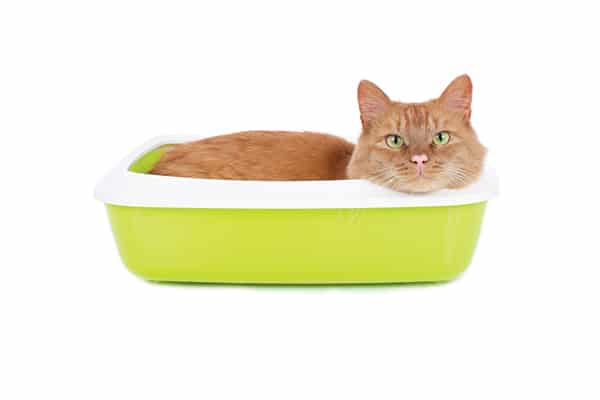
An orange tabby cat hangs out in a yellow litter box.

Cat droppings in kittens

Dr. Plotnick called the kittens "little eating and pooping machines". He noted that kittens generally defecate several times a day. Because of their small size, changes in stool should be monitored.

Don't worry: if your kitten misses a day in the litter box - that is, if she doesn't poop for a day - keep an eye on her. However, constipation that lasts more than a day can be a concern. It can have serious consequences if not recognized and treated in time," said Dr. Plotnick. If you don't see stool in the litter box after more than a day or two, or if your kitten becomes exhausted trying to defecate, take her to the vet as soon as possible.

Related: Let's talk poop! When is feline diarrhea a concern?

Be concerned : If your kitten begins to have diarrhea, plan a visit to the vet immediately. "I think diarrhea in kittens is always a concern because their small size makes them very susceptible to dehydration," says Dr. Plotnick. "Kittens don't tolerate dehydration very well and can become dangerously ill quickly if [the diarrhea] is not treated quickly. All cases of diarrhea in kittens must be examined". As a kitten grows to adulthood, the risk of occasional mild diarrhea and constipation decreases. "All cats suffer from occasional diarrhea or constipation," said Dr. Plotnick. "In most cases, it resolves itself or with minimal intervention, such as a change in diet or brief medication.

Cat droppings in adult cats

Jack had cat diarrhea during his adult years, caused by an allergy to his food. The main source of protein in his diet was chicken, so with the encouragement of my vet, I gradually switched him (and his feline companion, Phillip) to a diet based on beef and salmon protein. This change in diet solved the problem of diarrhea, and Jack's general coat and skin condition also improved. Diarrhea in adult cats can also be caused by inflammatory bowel disease or colitis and inflammation of the colon. Both of these conditions can be diagnosed by your veterinarian. In adult cats, constipation is most often related to hairballs that a cat has difficulty passing through, although your cat should be examined by a veterinarian to rule out other causes such as megacolon.

Don't worry: if your veterinarian rules out more serious problems, you may be able to treat your cat for constipation at home. "Hairball ointment, when given two or three times a week, is good for controlling hairballs," said Dr. Plotnick. "When given daily, it can act as a stool softener. A change in diet may also help. "Cats that are prone to constipation should be fed primarily canned food, rather than dry food, which can be more constipating," explained Dr. Plotnick.

This is a concern: Colitis can have many possible causes, including a sudden change in diet, eating something unusual, overeating, food allergies, bacterial infections, parasites, Giardia and even stress. Although occasional colitis is not uncommon - especially since cats are particularly sensitive to changes in their environment - Dr. Plotnick said regular, recurring episodes of diarrhea can be a cause for concern. If your cat regularly has diarrhea, take him or her to the veterinarian for a thorough examination as soon as possible. Jack is probably the model cat when it comes to being sensitive to changes in his environment - and it's certain that when two other cats and a dog moved in last summer, Jack's diarrhea came back. After a visit to the vet revealed no parasitic or bacterial causes, my vet and I examined some of the possible causes that could be related to Jack's age, as he is approaching the age of an older cat.

Cat poop in older cats

Cat diarrhea can be one of the many symptoms of hyperthyroidism, for example, with voracious appetite, weight loss, excessive thirst and urination, and vomiting. Luckily for Jack, the diarrhea went away quickly, but I'm watching for signs of it.

Don't worry: most, if not all, cats will suffer from diarrhea or constipation in their lifetime. An episode that lasts a day or two, even if it is not pleasant, is not uncommon.

Be Concerned: If your older cat has diarrhea or constipation for more than a day or more, take her to the veterinarian as soon as possible. "Cats become more fragile as they get older," said Dr. Plotnick. "And older cats can decline rapidly if problems such as diarrhea or constipation are not treated promptly.

How Long Do Cats Live? Facts About the Average Cat Lifespan

"A novel must be exceptionally good to live as long as the average cat." This aphorism is widely attributed to Philip Stanhope, the fourth Earl of Chesterfield. Lord Chesterfield lived through the period in English literary history when novels were just beginning to become popular, and when there was already a feeling that all forms of media were ephemeral. What did Chesterfield have in mind? How long do cats live on average?

What are the facts about the lifespan of a cat? Here at Catster we have researched the average lifespan of cats and we have all the information we need to answer the question "How long do cats live? We've put together the numbers and can tell you that, just like in the novels, the life expectancy of cats depends on a variety of circumstances, including environment, diet and health. We will give you information on everything from the general question "How long do cats live?" to the average age of the oldest cat living "currently", to the average peripheral age and the average life span of indoor and outdoor cats.

How long do cats live? The average lifespan of a cat varies depending on many different factors.

So, how long do cats live? What is the average lifespan of a cat?

How long do cats live? Environment, maintenance, health, and whether the cat is spayed or neutered - all of these factors are important when thinking about a cat's life expectancy. Neutering can be an important factor. Neutering eliminates the risk of developing diseases that can affect a cat's reproductive system at an advanced age.

On the Internet, it has become evident that with access to current medical and nutritional advances, the ideal cat "can" or "may" live up to 20 years and beyond. According to a survey of ten reputable sites that deal with the average domestic cat, the figures are more inconsistent, ranging from 10 to 20 years. The average lifespan of a domestic cat is 15.1 years.

The breed of the cat is certainly a factor to consider when answering the question "How long do cats live? We could list the lifespan of each breed of cat, but then we would be here forever. Our research suggests that mixed breed cats are, in general, more resilient and live longer than purebred cats. Do you have a question about the longevity of a specific breed? Please see our list of purebred and hybrid cats.

When we answer the question "How long do cats live?" we, like Lord Chesterfield, are concerned about the "average cat". On average, female cats live one to two years longer than male cats. On average, indoor cats live longer than outdoor cats. On average, wild, homeless and feral cats live much less than domestic cats.

What if they were indoor cats?

Regarding the question "How long do cats live?" all of our research suggests that indoor cats live almost three times longer than outdoor cats. How long do cats live if they are indoor cats? Indoor cats are usually spayed, neutered, vaccinated and kept away from the stress, risks and dangers of the outside world. They are fed regularly and have easy access to fresh, clean water.

Related: 5 reasons to adopt an older cat

They require more attention, more distractions, and must be encouraged to get enough exercise to avoid obesity. Fortunately, attentive cat owners provide them with all of these things. The number of these cats varies considerably from site to site, ranging from 14 to 20 years of age. According to the figures we have recorded, the average lifespan of an indoor cat is 16,875 years.

What is the lifespan of cats - if they are outdoor cats?

There are a number of difficulties that tend to limit the average lifespan of an outdoor cat. Of course, "outdoors" means different things depending on where a cat lives and when you answer the question "How long do cats live?

Do you live in an urban, suburban, rural or remote area? How many neighbors have outdoor cats? Do you live in an area where there is an abundance of predatory wildlife? Are there wild or stray animals nearby? Is the climate conducive to a year-round outdoor lifestyle? How far do you live from roads and traffic routes?

These are all limiting factors, as is increased exposure to fleas, ticks and other pests and diseases. Outdoors, cats can also fight and scratch with other cats and are more exposed to accidents.

However, they also have the freedom to explore, to delineate their favorite perches and to exercise in a natural way. Since there are many more unpredictable variables, the numbers are generally not good, and cats live much longer, from three to ten years. The average life expectancy of cats outdoors is 5,625 years.

An elderly woman with her cat.

How long can cats live?

I can hear you say: "But my cat..." These numbers are all averages. My cat, Klesko, has always been an outdoor cat and she is 15 years old. There are always outliers that defy averages when it comes to answering the question, "How long do cats live?

The Guinness Book of Records indicates that the oldest recorded cat age was reached by Creme Puff, a cat who died in Austin, Texas at 38 years and three days, a truly great age, almost incomprehensible. The age of the oldest living "current" cat is much more variable, as this information can be exceeded at any time.

Related: How to increase the life expectancy of cats

In reviewing the information from the last few years, I saw that the oldest "current" cat was between 23 and 36 years old. Over the past ten years, the oldest living cat has averaged 29,857 years of age. Who is the current record holder? Rather than risking our own obsolescence, we suggest you check on the Guinness website. Its "Oldest Cat Living" page wisely and explicitly states that the current record holder is a flexible and changeable position.


4 Things to Know About Cats With Blue Eyes

As a cat adoption counselor for a shelter, I often receive potential adopters who see a kitten's blue eyes and ask me - especially if the cat is white as well - if it is deaf. Assuming that all blue-eyed cats, which are not nearly as common as yellow or green eyes in cats, are deaf is a common misconception," says Dr. Leslie A. "It's a common misconception. Lyons, a feline geneticist. She is the Gilbreath-McLorn Professor of Comparative Medicine at the University of Missouri-Columbia School of Veterinary Medicine in the Department of Veterinary Medicine and Surgery.

"Most people think it's because of their blue eyes, that they're deaf or they don't know at all," Dr. Lyons says.

Here are a few things to know about blue-eyed cats, which almost always result from two coat colors: white or seal-pointed (a beige or fawn body with darker colors on the face, tail and legs).

A seal point Birman kitten with blue eyes and a toy.

1. Let's talk about breeds of blue-eyed cats

If you want a purebred blue-eyed cat, look for breeds with a seal-point coloration, which is genetically related to blue eyes. Breeds of blue-eyed cats include Siamese, Balinese, Himalayan, Persian, Burmese and Javanese. Ragdolls are known for their sparkling blue eyes, but not all Ragdolls have this color. There is also the very rare Ojos Azules breed, which can produce cats with dark coats and blue eyes. The blue eyes of these breeds are not related to deafness," explains Dr. Lyons.

Odd-eyed white cats -- those with one blue eye and one non-blue eye -- tend to be deaf on the side with the blue eye.

2. What about white cats with blue eyes? What percentage of white cats with blue eyes are deaf?

It's a different story for blue-eyed white cats - about 60% of the dominant white kittens - which have obtained their coloring through mutations in a gene called KIT. In these cats, blue eyes are the result of a cellular problem: These irises have fewer melanocytes, which are cells that make pigment. These same cells create skin pigment and play a role in the functioning of the inner ear. As a result, cats with fewer melanocytes - white cats with blue eyes - may not have enough cells for their hearing to function properly, explains Dr. Lyons. White cats have a similar genetic makeup to albino humans, who lack pigment; this gives them certain vulnerabilities, such as sensitivity to UV rays.

It is estimated that 40% of white cats with blue eyes are deaf, which is high. But look at it this way: If 40% of these cats are deaf, it means that the majority (60%) can hear.

Some cats have different colored eyes, such as a blue eye and a green eye. In this case, Dr. Lyons says that hearing loss can occur in only one ear, especially on the side of the face with the blue eye.

A small, scared or nervous calico kitten.

3. If your kitten has blue eyes, they may not stay that color.

Like some human babies, all kittens are born with blue eyes that can change color later on. The hue begins to change to the kitten's true eye color around 6 or 7 weeks of age. The melanocytes of the iris - the pigment that gives the cat's eye its adult color - develop once the eye is mature enough.
4. How do you know if a blue-eyed cat is deaf?

If you want to know if a blue-eyed cat is deaf, move back a few meters behind it and clap or make another loud noise. If your cat reacts and looks towards you, it is probably not deaf, at least in both ears. Cats are very good at sensing non-auditory vibrations, so stand on the other side of the room to leave enough room," explains Dr. Lyons.

If you still can't tell if a white cat with blue eyes is deaf (or if you're curious about a cat's hearing problems), take him or her to your veterinarian for more definitive tests.

How to Switch Your Cat’s Food From Dry to Wet or Vice Versa


Cats, at least in a stereotypical way, like to live their lives on their own terms. Unlike dogs who live to please, Kitty will probably tell you that you're doing a lousy job petting her or that your new shaggy rug is not nearly as beautiful as the one you had plush.

This is partly a common phenomenon on the Internet, but when it comes to food, cats tend to be much more picky about what they eat, which can make it difficult to change.

"Cats are more demanding when it comes to palatability, texture and flavor," says Dr. Angie Kraus of I and love and you.

But according to Dr. Kraus, wet food is better for cats than dry food.

"Cats are carnivores," she says. "When we give them kibble, we give them a lot of carbohydrates. To make a kibble, you have to make it crunchy, which requires a kind of carbohydrate like... rice.

A high carbohydrate diet can lead to obesity, dental and gastrointestinal problems and pancreatitis. Even though Kitty loves her kibble, Dr. Kraus thinks it's worth switching a cat from dry to wet food. She gives advice on how even the most special kitten can adapt to this change.


Go slow


Dr. Kraus advises not to try to take cover by handing out dry food one day and wet food the next. "Cats will certainly win in a game of hunger," she says. "If you don't feed a cat for 72 hours, it can have fairly serious problems like liver disease that is not reversible and can even be life-threatening. Instead, try giving her some wet food to see if the cat is interested. "If not, I will mix it with what he already likes so that he slowly gets used to it. Every two days, decrease the amount of dry food and increase the amount of wet food. Patience is a virtue. According to Dr. Kraus, some cats can switch from dry to wet food in a week. "For cats that are not so easy to live with, it may take a few months," she warns.

Get creative


If Kitty doesn't adopt her new diet, you may need to try a few things. Remember that cats have their idiocracies. "Some cats have very specific temperature preferences," says Dr. Kraus. "People who try to switch their cat from kibble to wet food may find that they like their food to be slightly warm or with a little water." Sometimes presentation can be critical. "They don't like the bowl. They don't want their whiskers to touch the bowl, or they want a plate, but they don't want that plate to be plastic," says Dr. Kraus, even the location of the bowl or plate and the time you put it out can affect whether Kitty takes the food or leaves it. Play with it.

Related: Making Mealtime Fun for Cats

Sometimes combo-feeding is a good compromise. "If there can be wet food, it's better, and many people have to resort to combo-feeding because their cats refuse to eat only wet food, and some cats will only eat dry food once they get used to dry food," explains Dr. Kraus.


How about switching from wet cat food to dry food?

Although Dr. Kraus says that wet food is the best, sometimes people want to do the opposite and switch to dry food.

"The most practical consideration is to be able to leave [the cat on the weekend] without a pet or for economic reasons," explains Dr. Kraus. "Dry food can be much cheaper than wet food.

This transition should also be slow. Start by taking out a small kibble to see if the cat will take it. If not, mix it with wet food. Doesn't it work? "There are a lot of toys and fun food dispensers that make it interesting," says Dr. Kraus. "They can roll a ball, and it can dispense food or it can look like grass, and they have to hit it to get it out of the grass."

How to Feed Your Cat If You’re Food Insecure


Unemployment skyrocketed during VIDOC-19, and people are struggling to put food on their tables. When parents of cats cannot afford to feed themselves, they are likely to have difficulty making ends meet for their pets as well.

If you are in pain, know that you are not alone. The ASPCA recently released new data showing that more than 4.2 million pets in the U.S. are at risk of entering poverty in the next six months as a result of COVID-19.

"With a national unemployment rate of 10 percent, the total number of pets living in poverty with their owners could reach more than 24.4 million dogs, cats, horses and other animals, a 21 percent increase in the number of animals living in poverty compared to pre-VIDOC estimates [as of February 2020]," said Jessica Sweeney, ASPCA's Community Engagement Program Manager. "The number of families struggling to care for their pets is staggering.

Jessica Sweeney offers tips on finding resources if you need help feeding your cat, and no one should be ashamed to ask for help.

Look for a food pantry


Local shelters operate food banks and food pantries. Pet owners can Google "pet food pantry near me" to find one. Local shelters and veterinarians can also point you in the right direction.

Feed Your Cat If You’re Food Insecure

Keep an eye out in aisles


Pet stores such as PetsMart and Petco often have samples available on the shelves. You can try to stock up on them to help you. They may also have coupons that you can use. If you can't find any, try calling your favorite kitten food vendor and explain your situation. They may send you coupons or free samples.
Don't be shy

Asking for help can be emotional. You may feel inadequate because you can't afford to buy cat food or because you are embarrassed to ask for help, but you shouldn't. Organizations are there to help you.

"The COVID-19 pandemic has created unprecedented challenges for pet owners by straining their essential resources and making it difficult for them to access the supplies and services they need to care for their pets," says Sweeney. "We believe that pets and people are meant for each other; that financial circumstances alone are not reliable indicators of the ability to love and care for a pet," he says.


How to Calm an Angry Cat


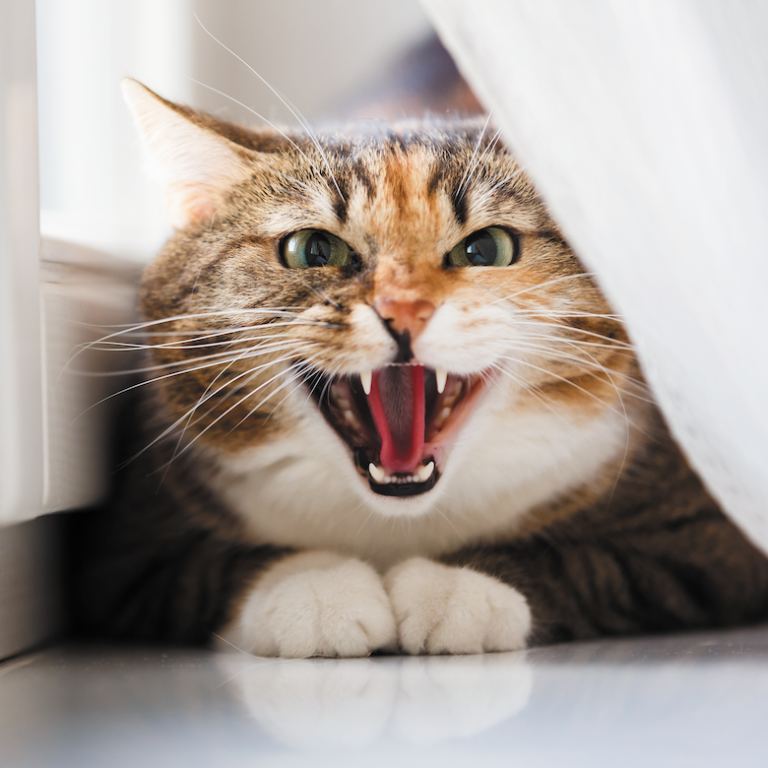
Spend a few minutes watching social media, and you'll agree: Cats are soft, friendly and cuddly. Until they're not.Whether it's your own cat or a cat you've just met, it can be quite intimidating to watch a kitten become aggressive and decide to pick on you. As a professional cat sitter, behaviorist and mother of cats for many rescued felines, I've known more than my fair share of cats that behave in downright scary ways.

What makes a cat go from the innocent angel to the Tasmanian devil? There are as many reasons as there are cats, but it all comes down to a few main culprits :

fear and anxiety
under- or over-stimulation
medical problems and/or pain

We will explore the anatomy of each and how to calm an angry cat.
Fear and Anxiety

You will see that cats become fearful and aggressive when they feel fear or anxiety. From attachment problems that cause separation anxiety to inappropriate aggression that can cause a cat to attack, these cats are simply trying to protect themselves from the unknown and potential danger. Newly adopted cats, as well as your own cat companion, can both exhibit this type of aggression.

Anxiety in newly adopted cats: A newly adopted cat may exhibit this type of behavior once you have brought it home. In most cases, little is known about the cat's living conditions before adoption, and the kitten is likely to be frightened and confused about what is happening to her.
Being moved from her home, placed in a shelter, and then adopted into your home can be a traumatic experience. She will need time to adjust. He may react by hiding, and attempts to coax him into hiding may be met with angry wheezing and spitting until he gets his bearings and begins to trust you.

Current Cat Anxiety: If your current feline friend begins to act fearful and aggressive, there could be several reasons for his or her behaviour to change. Changes in the household can be a source of insecurity:

the arrival or departure of new people/animals
outdoor kittens to hunt
moving to a new location

Reasons like these can cause your cat to get angry in unexpected ways.

Many couples have consulted me once they were married because of their cat's aggressive behaviour towards the new partner. Fear and anxiety related to the perceived lack of resources (e.g., parental affection or space on the bed) is often the reason. Even a small change can make a cat a little freaked out.

One of my cats, Precious, has already reacted aggressively to me after I had my nails done. She started growling and slapping my hand!
Under or over-stimulation

If your cat does not receive enough or even too much attention, he may become irritated. You can't bring a new cat home and leave it alone to make its life in your home. It is a myth that cats are solitary and do not want to be disturbed by people. But you must also consider your cat's need to spend time alone. After all, cats need those 18 hours of beauty rest!

Under stimulation: If you leave a cat alone and never approach it, yes, it risks becoming a distant and unfriendly cat that never really trusts you or its environment. He may get bored, not stimulated, lack love and decide to bite or scratch you if you try to touch him.

Cats need constant interaction with us and reassurance that they are welcome in your home - that's what makes them feel safe with you. From the day you bring your cat home, the bond between you and your cat needs to be nurtured and maintained, and your cat needs to be reassured of your love through constant attention and interaction.

Over-stimulation: Let's say you've done all of this and now have a wonderfully loving relationship with your cat - for the most part. Still, sometimes your cat may hit you in ways that seem unprovoked, or bite your hand when you pet her, and then run away.

This is a reaction to over-stimulation. Your cat will give you subtle clues to let you know to stop touching her, but if you're not careful, you may miss her. Your cat will bite as a last resort to ask you to stop. Also be careful, if you haven't had a play session or cuddle with your cat for a while, she may be bored, suppress her energy and may bite you to get your attention.

Medical issues and pain


Medical Issues I clearly remember a behavioural case where I followed up with someone who had initially consulted Jackson Galaxy. This normally affectionate cat, huddled up against his feline counterparts in the house, would suddenly become venomous every time the other cats approached. Jackson rightly requested that the cat be seen by a veterinarian, where it was discovered that the cat had an unknown back injury. After taking over the consultation on the case, the client revealed that one of the other cats had jumped on the now angry cat during recess. We assumed that this had caused the cat pain due to the previously undiagnosed back injury.

Pain can make a cat act in a way that is not its normal personality. I know that when I'm sick I can get pretty angry with people, because I just want to be left to rest and recuperate. It's the same for your cat, and the only way he knows to be left alone is to become aggressive to keep people and other animals away.

When my cat Trouble had cancer, he changed his behavior. Although he didn't become wildly aggressive, his normally docile behavior changed to one of isolation and growling when approached by his feline friends. Once we diagnosed the problem and put him on pain medication, he was his usual personality for the last few months of his life.

Whenever you notice a change in personality, a visit to your veterinarian is a must. It is not uncommon for a problem that is supposed to be behavioral to have a medical cause and, once treated, it corrects aggressive behavior and pain.

How to Help

Help your cat through periods of aggression by first identifying the root cause of its behavior. If it is a situational, medical or a combination of both, the best way to correct the problem is to determine the source of your cat's anxiety so that you can address it appropriately.

A visit to the veterinarian, a better knowledge of your cat's body language, spending time with him and knowing when to leave him alone will help his mood to become lighter and happier. The use of your veterinarian's medication, over-the-counter herbal remedies or a combination of both can also help calm your cat down so that she can become cozy again, like all those cats on social media. Look, isn't he cute!


Does Your Cat Love Water?

One afternoon several years ago, my cat, Captain Jack Sparrow, was with me in my garden. He approached a glass flowerpot saucer filled with water and began to drink. The saucer was perched on a concrete step on the corner of my patio.

Birds were swimming in the water, squirrels were drinking the water and so was Jack.

I jokingly told him that the water must have tasted like bird paws, which is why he was attracted to it. He proudly walked away with drops of water hanging from the fur on his chin.

Jack was happy to drink like a lion in the wild. Since he liked this saucer of water, I kept it filled with clean water for when he would join me in the yard.

Over the years, Jack continued to enjoy the water more and more, from drinking it to drinking it standing up.
Does your cat like water?

Does Your Cat Love Water?

I moved into a smaller house with a small fenced yard around which I planted border gardens. Four glass saucers now provide water in the gardens and are perched on flower pots. The saucers are at chin height for Jack who likes to stand and drink from them at leisure.

Similarly, in my kitchen, I placed a red glass saucer on a yellow flowerpot and filled it to the rim with bottled water. Jack and my two other cats often drank from it.

Now I have a bubbling animal fountain that circulates bottled water and allows you to adjust the height of the water jet.

When I operate a swinging sprinkler in the gardens, Jack intentionally walks under the water drops and licks them into his fur.

When it rains, he stands on an ottoman near a window above my porch and meows. He wants to walk on the roof in the rain, trotting on the shingles to the gutter to drink, and licking water from his fur.

When I open the fridge and pull the cap off a can of bottled water, Jack hears it, hurries to the kitchen and stands beside me waiting for a drink.

A glass full of cold water isn't the only drink Jack finds appealing. He also likes juice or iced tea. He finds me sitting somewhere in the house and goes up to the drinking container. He puts his whole head inside the glass to reach the liquid with his tongue.

Does Your Cat Love Water?

Jack's obsession with alcohol initially alarmed me by telling me that he might have a health problem, such as diabetes. However, blood tests show that he is fine.

Cats often have a low thirst, which can lead to dehydration and urinary tract problems. Cat owners sometimes have difficulty attracting their cats to water sources and getting them to drink.

Fortunately, this is not a problem for Jack. My vet told me to give him as much water as he wants, but he wants it.

You can imagine my big eyes when he started popping up behind me in my tub while I was taking a shower. He was meowing at me, soaking his fur and jumping out of the tub.

I now have a walk-in shower. Jack used to stay in the shower and meow until I turned on the water. I would turn on the shower head and he would bite the water drops as they splashed on him.

Now I leave the removable shower head hanging and it hovers just above his head. I let the water run so he can access it as he wishes.

I smile at Jack's love for water and the name I have given him that matches his personality.

I first named him Sparrow because he was found under a bush when he was a kitten and was hypnotized by a flock of sparrows in the branches above him. His name changed to Captain Jack Sparrow because I liked the character from the Pirates of the Caribbean movies. My feline Jack also has the suave and funny personality of Captain Jack.

Just as Captain Jack Sparrow stood at the bow of a ship, smiling with a salty sea mist in his face, my Jack runs to the lawn sprinklers, a dripping showerhead and the porch roof when it rains.

Contact Us


[submit "Submit"]

Terms & Conditions

Terms and Conditions


Welcome to viralnave!

These terms and conditions outline the rules and regulations for the use of viralnave's Website, located at www.viralnave.com.

By accessing this website we assume you accept these terms and conditions. Do not continue to use viralnave if you do not agree to take all of the terms and conditions stated on this page.

The following terminology applies to these Terms and Conditions, Privacy Statement and Disclaimer Notice and all Agreements: "Client", "You" and "Your" refers to you, the person log on this website and compliant to the Company’s terms and conditions. "The Company", "Ourselves", "We", "Our" and "Us", refers to our Company. "Party", "Parties", or "Us", refers to both the Client and ourselves. All terms refer to the offer, acceptance and consideration of payment necessary to undertake the process of our assistance to the Client in the most appropriate manner for the express purpose of meeting the Client’s needs in respect of provision of the Company’s stated services, in accordance with and subject to, prevailing law of Netherlands. Any use of the above terminology or other words in the singular, plural, capitalization and/or he/she or they, are taken as interchangeable and therefore as referring to same.

Cookies


We employ the use of cookies. By accessing viralnave, you agreed to use cookies in agreement with the viralnave's Privacy Policy.

Most interactive websites use cookies to let us retrieve the user’s details for each visit. Cookies are used by our website to enable the functionality of certain areas to make it easier for people visiting our website. Some of our affiliate/advertising partners may also use cookies.

License


Unless otherwise stated, viralnave and/or its licensors own the intellectual property rights for all material on viralnave. All intellectual property rights are reserved. You may access this from viralnave for your own personal use subjected to restrictions set in these terms and conditions.

You must not:

  • Republish material from viralnave

  • Sell, rent or sub-license material from viralnave

  • Reproduce, duplicate or copy material from viralnave

  • Redistribute content from viralnave


This Agreement shall begin on the date hereof. Our Terms and Conditions were created with the help of the Terms And Conditions Generator and the Privacy Policy Generator.

Parts of this website offer an opportunity for users to post and exchange opinions and information in certain areas of the website. viralnave does not filter, edit, publish or review Comments prior to their presence on the website. Comments do not reflect the views and opinions of viralnave,its agents and/or affiliates. Comments reflect the views and opinions of the person who post their views and opinions. To the extent permitted by applicable laws, viralnave shall not be liable for the Comments or for any liability, damages or expenses caused and/or suffered as a result of any use of and/or posting of and/or appearance of the Comments on this website.

viralnave reserves the right to monitor all Comments and to remove any Comments which can be considered inappropriate, offensive or causes breach of these Terms and Conditions.

You warrant and represent that:

  • You are entitled to post the Comments on our website and have all necessary licenses and consents to do so;

  • The Comments do not invade any intellectual property right, including without limitation copyright, patent or trademark of any third party;

  • The Comments do not contain any defamatory, libelous, offensive, indecent or otherwise unlawful material which is an invasion of privacy

  • The Comments will not be used to solicit or promote business or custom or present commercial activities or unlawful activity.


You hereby grant viralnave a non-exclusive license to use, reproduce, edit and authorize others to use, reproduce and edit any of your Comments in any and all forms, formats or media.

Hyperlinking to our Content


The following organizations may link to our Website without prior written approval:

  • Government agencies;

  • Search engines;

  • News organizations;

  • Online directory distributors may link to our Website in the same manner as they hyperlink to the Websites of other listed businesses; and

  • System wide Accredited Businesses except soliciting non-profit organizations, charity shopping malls, and charity fundraising groups which may not hyperlink to our Web site.


These organizations may link to our home page, to publications or to other Website information so long as the link: (a) is not in any way deceptive; (b) does not falsely imply sponsorship, endorsement or approval of the linking party and its products and/or services; and (c) fits within the context of the linking party’s site.

We may consider and approve other link requests from the following types of organizations:

  • commonly-known consumer and/or business information sources;

  • dot.com community sites;

  • associations or other groups representing charities;

  • online directory distributors;

  • internet portals;

  • accounting, law and consulting firms; and

  • educational institutions and trade associations.


We will approve link requests from these organizations if we decide that: (a) the link would not make us look unfavorably to ourselves or to our accredited businesses; (b) the organization does not have any negative records with us; (c) the benefit to us from the visibility of the hyperlink compensates the absence of viralnave; and (d) the link is in the context of general resource information.

These organizations may link to our home page so long as the link: (a) is not in any way deceptive; (b) does not falsely imply sponsorship, endorsement or approval of the linking party and its products or services; and (c) fits within the context of the linking party’s site.

If you are one of the organizations listed in paragraph 2 above and are interested in linking to our website, you must inform us by sending an e-mail to viralnave. Please include your name, your organization name, contact information as well as the URL of your site, a list of any URLs from which you intend to link to our Website, and a list of the URLs on our site to which you would like to link. Wait 2-3 weeks for a response.

Approved organizations may hyperlink to our Website as follows:

  • By use of our corporate name; or

  • By use of the uniform resource locator being linked to; or

  • By use of any other description of our Website being linked to that makes sense within the context and format of content on the linking party’s site.


No use of viralnave's logo or other artwork will be allowed for linking absent a trademark license agreement.

iFrames


Without prior approval and written permission, you may not create frames around our Webpages that alter in any way the visual presentation or appearance of our Website.

Content Liability


We shall not be hold responsible for any content that appears on your Website. You agree to protect and defend us against all claims that is rising on your Website. No link(s) should appear on any Website that may be interpreted as libelous, obscene or criminal, or which infringes, otherwise violates, or advocates the infringement or other violation of, any third party rights.

Your Privacy


Please read Privacy Policy

Reservation of Rights


We reserve the right to request that you remove all links or any particular link to our Website. You approve to immediately remove all links to our Website upon request. We also reserve the right to amen these terms and conditions and it’s linking policy at any time. By continuously linking to our Website, you agree to be bound to and follow these linking terms and conditions.

Removal of links from our website


If you find any link on our Website that is offensive for any reason, you are free to contact and inform us any moment. We will consider requests to remove links but we are not obligated to or so or to respond to you directly.

We do not ensure that the information on this website is correct, we do not warrant its completeness or accuracy; nor do we promise to ensure that the website remains available or that the material on the website is kept up to date.

Disclaimer


To the maximum extent permitted by applicable law, we exclude all representations, warranties and conditions relating to our website and the use of this website. Nothing in this disclaimer will:

  • limit or exclude our or your liability for death or personal injury;

  • limit or exclude our or your liability for fraud or fraudulent misrepresentation;

  • limit any of our or your liabilities in any way that is not permitted under applicable law; or

  • exclude any of our or your liabilities that may not be excluded under applicable law.


The limitations and prohibitions of liability set in this Section and elsewhere in this disclaimer: (a) are subject to the preceding paragraph; and (b) govern all liabilities arising under the disclaimer, including liabilities arising in contract, in tort and for breach of statutory duty.

As long as the website and the information and services on the website are provided free of charge, we will not be liable for any loss or damage of any nature.
Powered by Blogger.